Cultural Currents: Where Lifestyle Trends Are Born
From streetwear to slow living, cultural currents flow through subcultures, platforms, and cities—revealing how lifestyle trends are sparked and spread.
Seeds of a Trend
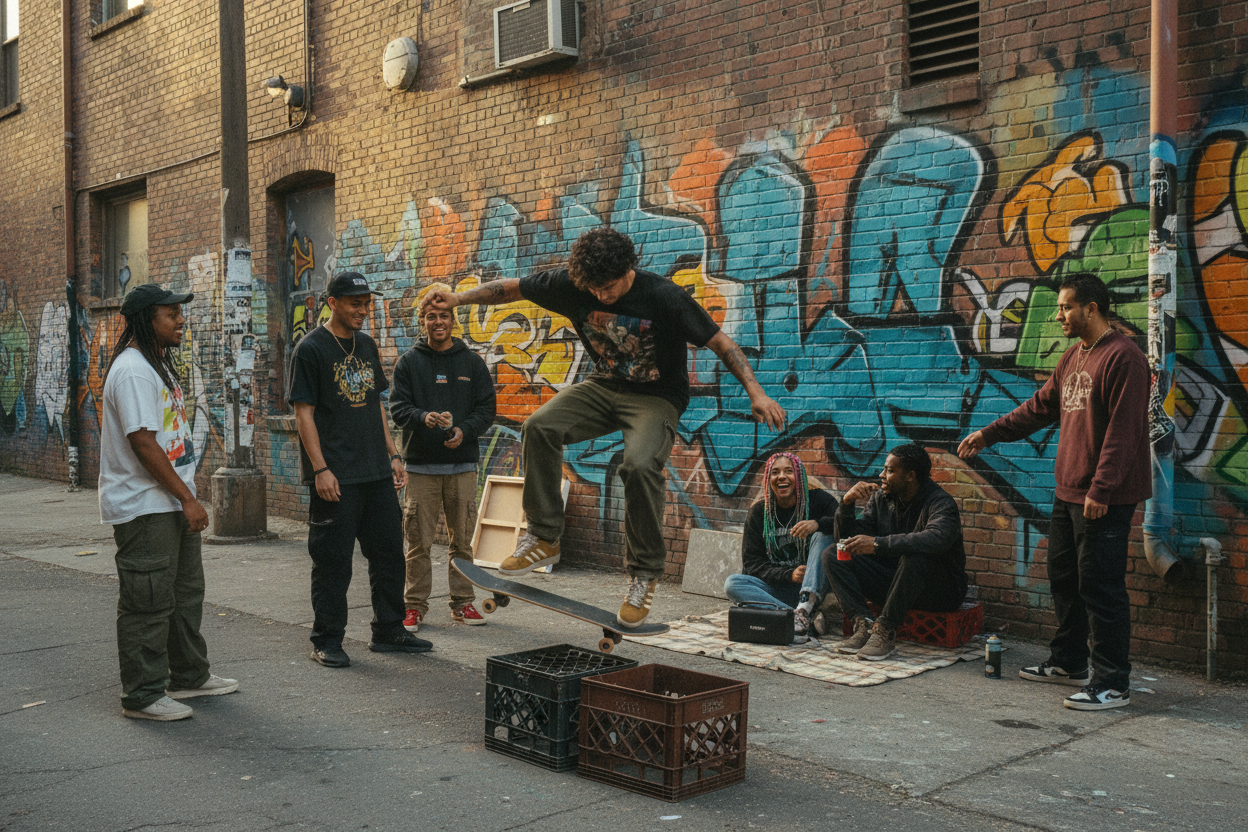
Lifestyle trends rarely arrive fully formed; they germinate in micro-communities where curiosity outweighs consensus. Skate parks, studio apartments, community gardens, niche forums, and pop-up kitchens are fertile ground for playful experimentation. Within these subcultures, constraints act like creative kindling: limited budgets, tight spaces, and improvised tools spark resourceful twists that feel both personal and shareable. A trend's earliest version is usually a ritual—how a beverage is brewed, how a room is arranged, how a morning routine unfolds—paired with a memetic hook that's easy to mimic. Participants test meaning through repetition, building identity signaling into small gestures: a particular silhouette, a color code, a plating style. The ideas that stick are legible yet flexible, with just enough ambiguity to invite reinterpretation. From there, the pattern spreads through friends-of-friends, travels by storytelling, and gains coherence as people swap instructions and iterate. The simple rule: when a practice delivers utility, status, or belonging, it gathers momentum.
Makers, Mavens, Multipliers
Once an idea shows promise, a cast of makers, mavens, and multipliers helps it travel. Makers refine the blueprint—designers adjust the proportions, chefs tune flavor arcs, fitness coaches standardize sequences—transforming a scrappy prototype into a repeatable practice. Mavens, the curators and explainers, craft language that frames the benefit: what it is, why it matters, and how to start. Their comparisons, glossaries, and before-and-after narratives reduce friction and boost trust. Multipliers—community organizers, trend translators, and charismatic hosts—supply reach and rhythm. They stage demos, publish short how-tos, and invite co-creation, turning observers into participants. Meanwhile, algorithmic amplification rewards ideas with high imitation value: visible outcomes, simple steps, and satisfying reveals. The most resilient trends offer modularity (swap-in parts), accessibility (entry at low cost or skill), and a feeling of signal (cultural relevance that earns social capital). As these roles braid together, the trend gains both narrative clarity and operational scaffolding.
From Niche to Norm
Crossing from niche experiment to everyday habit requires deliberate diffusion. Early adopters evangelize, but a broader audience demands frictionless onboarding: clear instructions, starter kits, adaptable templates, and time-saving shortcuts. Packaging matters—visually coherent aesthetics and intuitive naming create a sense of place for the practice to live. Social proof accelerates the climb: testimonials, peer demonstrations, and visible results validate the choice while lowering perceived risk. The trend also benefits from contextual fit—it must solve a real problem (energy, space, time, stress) or heighten pleasure (comfort, beauty, flavor, play). Overexposure, however, can dull its edge, so guardians of the culture protect authenticity by emphasizing values and reminding newcomers of origin stories. The healthiest trajectories balance scale with soul: a wide on-ramp for participation, room for creative remixing, and standards that prevent drift. When people can practice it daily, teach it easily, and see themselves in it, a trend turns into a norm.
Global Loops, Local Roots
Trends travel along global loops—media flows, diaspora ties, trade routes—yet they endure by sinking local roots. The process is glocalization: protect the core idea, then adapt to climate, materials, customs, and income realities. A home ritual might become heat-friendly in tropical regions, a fashion silhouette may absorb regional textiles, or a wellness practice may align with indigenous healing frameworks. Successful adaptation emphasizes hybridity rather than imitation, privileging collaboration with local makers, chefs, and storytellers who understand nuance. This approach avoids flattening culture and replaces appropriation with appreciation and attribution. Translation is more than language; it's aligning cadence, portion size, color symbolism, and seasonal rhythms. Trends gain resilience when they can be practiced with locally available tools and ingredients, priced for local economies, and integrated into existing festivals or daily routines. In this way, a portable spark becomes a rooted flame—recognizable across borders, yet unmistakably shaped by place.
Sensing the Next Wave
Spotting the next current requires attentiveness to weak signals and disciplined pattern recognition. Keep a curiosity log, gather field notes from markets and maker fairs, and listen for repeated complaints or delights. Triangulate across categories—food, interiors, movement, tech, craft—because trends often surface as adjacent possibles where fields overlap. Build moodboards that emphasize process over polish; track small indicators like stock-outs, pop-up queues, and unusual material substitutions. Then pressure-test with rapid prototypes and tight feedback loops: run small gatherings, pilot challenges, and limited drops to gauge stickiness beyond novelty. Ask three questions: Does it create value repeatedly? Can newcomers learn it fast? Is it culturally responsible? An ethical lens—covering sustainability, inclusion, and wellbeing—weeds out short-lived hype. Treat your portfolio like a tide chart: some bets swell slowly, others crest quickly. By staying curious, generous, and grounded, you'll recognize the moment when a personal experiment becomes a shared lifestyle.